
For US Healthcare Professionals
For US HCPs

You are about to leave a GSK website
You are about to leave a GSK website. By clicking this link, you will be taken to a website that is independent from GSK. The site you are linking to is not controlled or endorsed by GSK and GSK is not responsible for its content.
YOUR ADULT PATIENTS’ PROGRESS MAY BE CUT SHORT BY RSV1
Older adult patients, including those with certain comorbidities, are at an increased risk of severe RSV1
RSV is a common and contagious respiratory virus that can cause severe infections of the lower respiratory tract and can result in pneumonia or exacerbations of COPD, asthma, and HF.1
Severe RSV can lead to hospitalization and even death2

- *
Physician’s office address or, if missing, the preferred mailing address was used to determine whether an active physician is in the United States.4
Recognize the threat of severe RSV for older adult patients
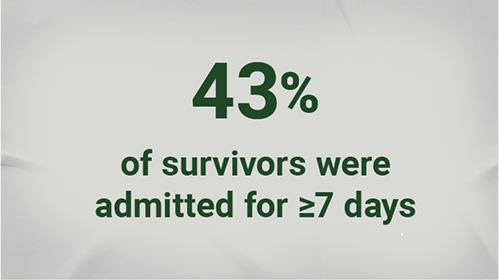
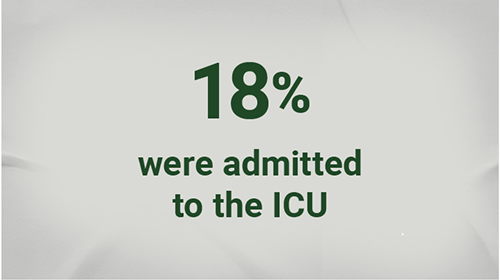
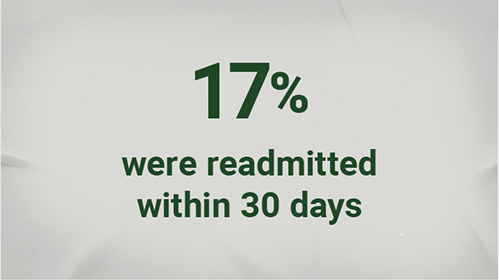
In a study conducted between January 2011 and June 2015 among patients aged 60 years or older hospitalized with RSV (N=645)5†:
- †
An observational, retrospective, cohort study conducted at an integrated health system evaluated adults aged ≥60 years hospitalized with RSV infection (n=645) or influenza infection (n=1878) over 5 consecutive seasons between January 2011 and June 2015 to compare demographics, prehospitalization characteristics, hospital utilization, and clinical outcomes.5
See how severe RSV can impact patients
Patients aged 60 years and older who were hospitalized with RSV experienced serious clinical outcomes5
Rates of events during hospitalization among adults aged 60 years or older with RSV5‡:

37.7
Cardiovascular complications§

18.9%
Acute renal failure

16.9%
Respiratory exacerbations||
- ‡
An observational, retrospective, cohort study conducted at an integrated healthcare system evaluated adults aged ≥60 years hospitalized with RSV infection (n=645) or influenza A/B infection (n=1878) over 5 consecutive seasons between January 2011 and June 2015 to compare demographics, prehospitalization characteristics, hospital utilization, and clinical outcomes. Patients with RSV had the following rates of comorbidities 1 year prior to admission: 32.2% had ischemic heart disease; 35.3% had CHF; 38.9% had diabetes; 29.8% had COPD, chronic bronchitis, or emphysema; 26.0% had asthma; and 5.6% had end-stage renal disease.5
- §
Defined as myocardial infarction, pericarditis, endocarditis, myocarditis, or atrial fibrillation.5
- ||
Defined as exacerbation of COPD, chronic bronchitis, or emphysema.5
Talk to your adult patients about the threat of severe RSV


See Irene’s journey with RSV
Hear Irene tell her own story of RSV.
AAMC=Association of American Medical Colleges; CHF=congestive heart failure; COPD=chronic obstructive pulmonary disease; HF=heart failure; ICU=intensive care unit; RSV=respiratory syncytial virus.
References
Respiratory syncytial virus infection (RSV). RSV in adults. Centers for Disease Control and Prevention. Accessed March 3, 2026. https://www.cdc.gov/rsv/adults/
Falsey AR, Hennessey PA, Formica MA, Cox C, Walsh EE. Respiratory syncytial virus infection in elderly and high-risk adults. N Engl J Med. 2005;352(17):1749-1759. doi:10.1056/NEJMoa043951
American Association of Medical Colleges. US Physician Workforce Data Dashboard. Accessed March 2, 2026.
Association of American Medical Colleges. US Physician Workforce Data Dashboard Methods. Accessed March 6, 2026.
Ackerson B, Tseng HF, Sy LS, et al. Severe morbidity and mortality associated with respiratory syncytial virus versus influenza infection in hospitalized older adults. Clin Infect Dis. 2019;69(2):197-203. doi:10.1093/cid/ciy991